
Breathwork for Beginners: How to Choose the Right Type of Breathwork for You

If you’ve recently discovered breathwork, you may have noticed that there isn’t just one way to practice it.
You might come across slow breathing, breath awareness, energizing techniques, rhythmic breathing, meditation-based practices and guided breathwork sessions.
With so many options, one question naturally comes up:
“Which type of breathwork is right for me?”
The answer depends on what you’re looking for.
Maybe you want to slow down after a stressful day. Perhaps you want to become more mindful and connected to your body. You may be looking for an energizing practice in the morning, or you may simply want to explore breathwork for emotional wellness.
The good news is that you don’t need to know everything about breathwork before getting started.
Understanding the different approaches and choosing a practice based on your intention can make your first experience much more comfortable and meaningful.
In this guide, we’ll explore breathwork for beginners, different types of breathwork, how they differ, and how you can choose a practice that fits your needs.
What Is Breathwork?

Breathwork is a broad term used to describe practices that intentionally bring awareness to breathing or deliberately change breathing patterns.
Breathing normally happens automatically. We don’t have to think about every inhale and exhale.
But we can also consciously observe and influence our breath.
For example, you might:
Slow your breathing
Pay attention to each inhale and exhale
Practice a particular breathing rhythm
Use breath awareness during meditation
Explore a guided breathwork session
Use breathing as part of a relaxation routine
Different breathwork approaches have different intentions.
Some are gentle and calming.
Some are designed to feel energizing.
Some emphasize mindfulness.
Others may involve deeper emotional exploration.
This is why there isn’t one universally “best breathwork technique.”
The right starting point depends on your experience, comfort level and personal intention.
Why Are There So Many Types of Breathwork?

Breathing is something everyone does, but the way we breathe can change throughout the day.
Think about what happens when you:
Wake up
Exercise
Feel nervous
Laugh
Concentrate intensely
Become excited
Relax before sleep
Your breathing naturally responds to your physical and emotional state.
Breathwork practices intentionally work with this relationship.
Some practices encourage slowing down.
Others use specific rhythms.
Some focus almost entirely on awareness.
Others are more structured and guided.
Understanding these differences can help you choose a practice without feeling overwhelmed by all the terminology.
Different Types of BreathworK

1. Relaxation-Focused Breathing
If your main goal is to slow down and create a sense of calm, gentle breathing practices can be a good place to begin.
Relaxation-focused breathing generally emphasizes:
Comfortable breathing
A slower rhythm
Awareness of physical sensations
Releasing unnecessary tension
Creating a pause from daily activity
You don’t need to force the breath or take extremely large breaths.
Instead, the focus can be on allowing breathing to become smooth and comfortable.
Who might enjoy relaxation-focused breathwork?
It can be appealing if you:
Feel mentally busy
Want a calming evening ritual
Need a pause between tasks
Want to develop greater body awareness
Enjoy meditation and mindfulness
Are completely new to breathwork
For many beginners, this is one of the easiest places to start
A Simple Relaxation Breathing Practice for Beginners
Find a comfortable seated position.
Let your shoulders soften.
Notice your natural breathing for a few moments.
Then gradually allow the breath to become slower and smoother without forcing it
Pay attention to the sensation of the inhale
Then notice the exhale.
Continue for a few minutes.
The objective isn’t to achieve a particular emotional state.
It’s simply to slow down, notice and breathe consciously.
If you feel dizzy, uncomfortable or anxious, stop the exercise and return to your natural breathing.

2. Energizing Breathwork Practices
Not every breathwork practice is designed to make you feel calm. Some techniques are intended to feel more stimulating or energizing.
You don’t need an elaborate technique.
These practices may use:
A more active breathing rhythm
Structured breathing patterns
Repeated cycles
Specific timing
People may explore energizing practices when they want to feel more awake, focused or engaged.
However, these techniques can feel quite different from gentle relaxation breathing.
Beginners should remember:
More intense doesn’t automatically mean better.
If you’re new to breathwork, it can be helpful to learn an unfamiliar or more active technique from a qualified facilitator rather than experimenting with intense practices without guidance.
If you feel light-headed, distressed or physically uncomfortable, stop the practice.

3. Breathwork for Mindfulness
Mindfulness doesn’t necessarily require changing the way you breathe.
Sometimes, the practice is simply to notice the breath as it naturally happens.
You can observe:
The movement of your chest
The expansion of your abdomen
The sensation of air entering your nose
The temperature of the breath
The rhythm of your breathing
The pause between breaths
When your attention moves to a thought, you gently bring it back to the breath. This can turn ordinary breathing into an opportunity to practice present-moment awareness.
Why can this be helpful for beginners?
Because there is very little to “do.”
You don’t have to master a complicated breathing pattern.
You simply observe.
That makes breath awareness an accessible introduction to breathwork and mindfulness.

4. Breathwork for Emotional Wellness
Some breathwork sessions focus on emotional awareness and self-exploration.
These practices may invite participants to:
Notice physical sensations
Observe emotions
Become more aware of tension
Explore patterns of holding or releasing
Create space for reflection
Connect more deeply with their internal experience
A guided environment can be particularly valuable for this type of work because emotions can sometimes arise unexpectedly.
The intention should not be to force an emotional release.
Instead, the focus can be on creating a safe and supportive space where people can observe their experience without judgment.
Which Breathwork Technique Is Best for Beginners?
There is no single technique that is best for everyone.
A better question is:
“What do I want from my breathwork practice?”
Your intention can help narrow down your options.
Your Goal | Possible Starting Point |
Slow down | Gentle relaxation breathing |
Become more present | Breath awareness |
Build mindfulness | Mindful breathing |
Create an energizing experience | Guided energizing practices |
Explore emotional wellness | Facilitated breathwork |
Develop a regular wellness routine | Simple conscious breathing |
Learn safely as a beginner | Guided beginner session |
These are general starting points rather than strict rules
Your response to a particular practice may be different from someone else’s.
How to Choose Breathwork Based on Your Goal?

Let’s make the decision even simpler.
If You Feel Stressed or Overwhelmed Start with gentle breathing.
You don’t need an advanced technique.
Sit comfortably, relax your shoulders and bring your attention to the breath.
The intention is to create a small pause rather than trying to immediately eliminate every stressful feeling.
If You Want More Mindfulness
Try breath awareness.
Instead of changing your breathing, simply observe it.
This can be particularly useful if you enjoy meditation or want to become more aware of what is happening in your body.
If You Want More Energy Explore an appropriate energizing practice.
Because active breathing techniques can feel more intense, beginners may benefit from learning them with a trained facilitator.
Pay attention to how your body responds.
If You Want Emotional Exploration Consider a guided breathwork experience. A facilitator can provide structure, explain the process and help create a supportive environment. Emotional experiences can vary from person to person, so there should be no expectation that you must experience a dramatic “release.”
If You Simply Want to Try Breathwork Start with the simplest option: Notice your breath. You don’t need special equipment. You don’t need an elaborate setup. You don’t even need a long session. Begin with a few minutes of comfortable breath awareness and see how it feels.
What Is Guided Breathwork?
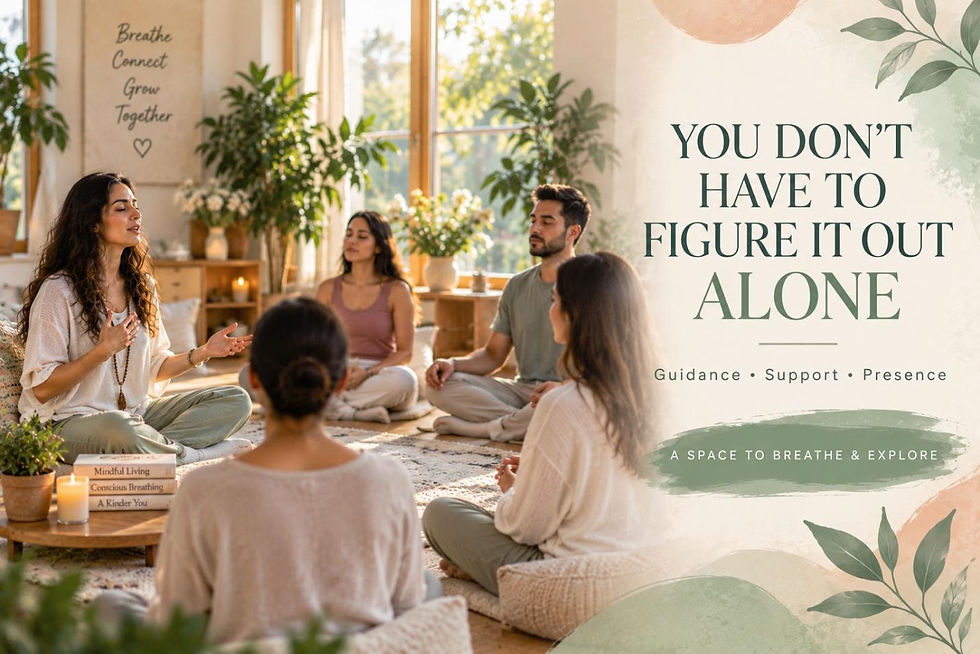
Guided breathwork is a practice where someone leads you through a particular breathing experience.
The facilitator may guide:
Breathing rhythm
Timing
Body awareness
Attention
Transitions between techniques
Relaxation
Reflection
For beginners, guidance can make the experience easier to follow because you don’t have to remember every step yourself.
Instead of constantly asking:
“Am I doing this correctly?”
you can focus more on experiencing the practice.
Why Guided Breathwork Can Be Helpful for Beginners?

Starting something new can sometimes feel intimidating.
A guided session can provide structure
1. You Know What to Expect A facilitator can explain the technique before the practice begins.
2. You Don’t Have to Memorize the Pattern You can follow verbal instructions rather than constantly checking instructions yourself.
3. You Have Support If you feel unsure or have questions, you can communicate with the facilitator.
4. You Can Learn Gradually
A good beginner session should introduce practices progressively rather than overwhelming participants with advanced techniques.
5. It Creates Dedicated Time
Instead of trying to squeeze breathwork between notifications and daily responsibilities, a guided session gives you intentional space to pause.
What Should You Expect During Your First Breathwork Session?
Every session can be different depending on the facilitator and style of breathwork.
A beginner-friendly session may include:
Introduction The facilitator explains the practice and what you can expect.
Intention Setting
You may be invited to identify what you want from the session.
For example:
“I want to slow down.”
Or:
“I want to become more aware of my body.”
Breath Awareness
You may begin by noticing your natural breathing.
Guided Practice
The facilitator introduces a particular breathing pattern or exercise
Integration
After the active portion, you may have time to rest, reflect and notice how you feel.
The experience doesn’t need to be dramatic to be meaningful.
Sometimes the most valuable outcome is simply noticing yourself more clearly
Breathwork Is Not a Competition
One misconception beginners sometimes have is that they need to breathe deeply, hold their breath for a long time or practice intensely to get the most from breathwork.
That’s not necessarily true.
Breathwork isn’t about:
Holding your breath the longest
Breathing the hardest
Having the strongest emotional reaction
Comparing your experience with someone else’s
Instead, think of it as an opportunity to develop a relationship with your breath and your body.
Your practice doesn’t have to look like anyone else’s.
What If I Don’t Feel Anything?
That’s completely okay
You might finish your first session feeling:
Calm
Relaxed
Energized
Emotional
Curious
Sleepy
Neutral
Exactly the same as before
There is no required emotional response.
Breathwork is a personal experience, and different practices may affect different people in different ways.
Instead of asking:
“Did I have a powerful experience?”
try asking:
“What did I notice?”
That question can lead to much greater self-awareness.
How Often Should Beginners Practice Breathwork?
There is no universal schedule.
For gentle breath awareness, you could begin with a few minutes at a time and gradually build consistency.
For more structured or intensive practices, follow the guidance of a qualified facilitator.
A simple routine might look like:
Morning 2–5 minutes of breath awareness.
Midday One conscious breathing pause between tasks.
Evening
A few minutes of gentle breathing to transition out of the day’s activities.
Consistency can be more useful than trying to do an hour-long session once in a while.
How to Create a Breathwork Habit?
The easiest way to build a habit is to connect it with something you already do. For example:
After waking up → breathe consciously
Before lunch → take a mindful pause
After finishing work → slow your breathing
Before bed → observe your natural breath
You don’t need to redesign your entire lifestyle.
Start with one small moment.
Then build from there.
Common Mistakes Beginners Make
Trying Too Many Techniques at Once You don’t need to learn five techniques in your first week.
Choose one simple practice and become familiar with it.
Forcing the Breath
Breathing should not become a test of endurance.
If you’re straining, back off.
Chasing a Particular Experience
You don’t need to feel emotional, euphoric or deeply relaxed for your practice to be valuable.
Practicing Intense Techniques Without Guidance
Some techniques can be physically and emotionally intense.
If you’re new, appropriate guidance can make the learning process safer and clearer.
Ignoring Your Body If something doesn’t feel right, stop.
Your body is giving you information.
Gentle Breathwork vs. Intensive Breathwork
It’s useful to understand the difference.
Gentle Breathwork | More Intensive Breathwork |
Often focuses on awareness | May involve stronger techniques |
Comfortable pace | Can involve more active patterns |
Beginner-friendly starting point | Better learned with appropriate guidance |
Often used for relaxation | May be used for deeper experiential work |
Lower intensity | Higher intensity |
Focus on comfort | Requires greater attention to suitability |
Neither category is automatically “better.”
They serve different purposes and should be approached appropriately.
How to Find a Breathwork Practice That Fits You?
Before choosing a session, ask yourself five questions.
1. What do I want right now?
Calm?
Awareness?
Energy?
Reflection?
Emotional exploration?
2. Am I a beginner?
If yes, choose a session specifically designed for beginners.
3. How comfortable am I with active breathing? If you’ve never practiced before, gentle techniques may be a better introduction.
4. Do I want to practice alone or with guidance?
Self-guided breathing can be simple and accessible.
A guided session can provide structure and support.
5. Does the facilitator explain the practice clearly?
Look for facilitators who explain:
What you’ll be doing
What sensations you might experience
When to stop
Who should avoid certain techniques
How the session will be structured
Good guidance should help you feel informed rather than pressured.
What Makes a Good Beginner Breathwork Session?
If you’re choosing a guided session, look for an experience that feels:
Clear: You understand what you’re being asked to do.
Supportive: You don’t feel pressured to perform.
Beginner-friendly: The practice is explained in accessible language.
Grounded: The facilitator avoids unrealistic promises.
Flexible: You’re encouraged to listen to your body
A good breathwork experience isn’t about convincing you that one technique will solve everything.
It’s about helping you explore your breath with greater awareness.
Safety Considerations for Beginners
Breathwork includes a wide range of practices, and not every technique is appropriate for everyone.
Gentle breath awareness is generally very different from intensive practices involving rapid breathing or prolonged breath holds.
If you are pregnant, have a medical condition, have concerns about your cardiovascular or respiratory health, or are unsure whether a particular technique is appropriate for you, seek guidance from an appropriate healthcare professional before participating in intensive breathwork.
During practice, stop if you experience significant discomfort, chest pain, fainting, severe shortness of breath or other concerning symptoms and seek appropriate medical attention when necessary.
A qualified facilitator should be transparent about the nature of the practice and any relevant precautions.
Breathwork for Beginners: Start With Curiosity
You don’t need to become an expert before taking your first breathwork session.
Start with curiosity.
Notice your breath.
Notice your body.
Notice how you respond.
You may discover that a gentle breathing practice works beautifully for you.
You may prefer mindfulness-based breath awareness.
You may eventually want to explore guided emotional wellness practices.
Or you may discover that your needs change from day to day.
That’s perfectly normal.
The goal isn’t to find one technique and follow it forever.
It’s to learn what helps you connect with yourself in a healthy and sustainable way.
A Simple Beginner’s Starting Point
If you’re completely new to breathwork, try this:
Sit somewhere comfortable.
Close your eyes if that feels comfortable.
Notice your breathing.
Don’t change it.
Observe the inhale.
Observe the exhale.
Relax your shoulders.
Notice your body.
Stay with your breath for a few minutes.
When your mind wanders, gently return to the sensation of breathing.
That’s it.
No complicated technique.
No perfect performance.
Just a few moments of conscious attention.
And sometimes, that’s the best place to begin.
Final Thoughts
There are many different types of breathwork, and choosing between them can feel confusing when you’re just getting started.
But you don’t need to try everything.
Start by identifying what you need.
If you want to slow down, explore gentle relaxation breathing.
If you want to become more present, try breath awareness.
If you want to explore energy and activation, learn an appropriate energizing technique with suitable guidance.
If you’re interested in emotional wellness, a guided session may provide a supportive environment for exploration.
Most importantly, remember that breathwork isn’t about forcing an experience.
It’s about developing awareness.
Breathe. Notice. Pause. Explore.
Your breath is already with you.
You simply have to begin paying attention.
Frequently Asked Questions
Q1. What is the best breathwork technique for beginners?
There isn’t one technique that is best for everyone. Gentle breath awareness and comfortable slow breathing are often accessible starting points for beginners.
Q2. How do I start breathwork for the first time?
Begin with a few minutes of comfortable breath awareness. Sit somewhere quiet, notice your natural breathing and gently bring your attention back whenever your mind wanders.
Q3. What are the different types of breathwork?
Breathwork includes many different practices. Broad categories include relaxationfocused breathing, energizing practices, mindfulness-based breathing and emotionally oriented guided breathwork.
Q4. Is guided breathwork better for beginners?
Guided breathwork can be helpful because a facilitator provides structure, explains the practice and helps beginners follow the process. However, simple breath awareness can also be practiced independently.
Q5. Can breathwork help with stress?
Gentle conscious breathing may support relaxation and provide a useful pause during everyday stressful moments. It should be viewed as a complementary wellness practice rather than a guaranteed treatment for stress-related or medical conditions.
Q6. Can beginners practice breathwork at home?
Yes. Simple breath awareness and gentle breathing practices can be practiced at home. More intensive techniques are better learned with appropriate guidance.
Q7. How long should a beginner practice breathwork?
Start with a few comfortable minutes and focus on consistency rather than duration. More structured practices should follow the facilitator’s guidance.
Q8. Is intense breathwork suitable for beginners?
Not necessarily. Some intensive techniques can create strong physical sensations and may not be appropriate for everyone. Beginners should consider learning them from an appropriately trained facilitator.
Q9. What should I do if I feel dizzy during breathwork?
Stop the technique and return to normal breathing. If symptoms are severe, persistent or concerning, seek appropriate medical attention.
Q10. Do I need special equipment for breathwork?
No. Many basic breath-awareness practices require nothing other than a comfortable place to sit or lie down.


Comments